


Marine desulfurization towers can be divided into three categories based on the treatment method of washing water: open, closed, and mixed. Each type of system has its own characteristics in terms of applicable scenarios, operating costs, and environmental performance. Shipowners need to choose according to the characteristics of the route, ship type, and regulatory requirements.
Product Description
Our marine desulfurization system parts serve as essential components for ship operators and marine engineers focused on meeting global environmental mandates. These parts ensure that marine desulfurization towers function optimally by treating exhaust gases from marine engines to reduce sulfur oxide emissions. Marine fleets operating in sensitive emission control areas rely on these components to uphold IMO regulations. The provision of imo compliant scrubber spare parts supports vessels using high-sulfur fuel by facilitating operational continuity and compliance with the 0.5% sulfur cap, positioning this solution as indispensable within marine exhaust gas cleaning setups.
Manufactured with corrosion-resistant alloys and advanced sealing methods, these components exhibit outstanding durability under high temperature and aggressive marine conditions. The marine desulfurization system parts include inlet baffles, valves, packing plates, and spray nozzles optimized for efficient sulfur oxide absorption rates reaching up to 98%. Integration with continuous emission monitoring systems enhances real-time data accuracy for SO₂ and O₂ levels, ensuring measurement precision within ±2% FS. The system adapts to open, closed, or mixed wash water configurations with automated control features, highlighting the technical sophistication embedded within these imo compliant scrubber spare parts.
Widely utilized by shipping companies retrofitting vessels or upgrading their emission control systems, the supply of marine exhaust gas cleaning spares supplier products contributes significantly to global sulfur emission reduction efforts. This technology supports compliance in emission control areas and emission control policies worldwide, directly decreasing atmospheric SO₂ release and mitigating environmental degradation. The reliability and performance of these parts enable marine operators to maintain uninterrupted sailing schedules while aligning with tightening environmental regulations and sustainability objectives expected by maritime stakeholders.
Exaust Gas System
The high-temperature raw flue gas (about 180-350 ° C) discharged from the main/auxiliary engine enters the washing tower through the inlet baffle and flue; Firstly, it undergoes pre spray cooling and dust removal, and then it fully contacts with seawater (open type) or alkaline solution (closed/mixed type) in reverse direction in the main spray area. Acidic pollutants such as SO₂ are absorbed and neutralized. Then, the flue gas rises through a defogger to remove fog droplets, and the clean flue gas is discharged through the outlet flue/chimney; The entire process is monitored online by CEMS for SO₂ concentration, particulate matter, and smoke temperature. PLC automatically controls the switching between bypass and spray modes based on the sea area (ECA/non ECA) to ensure emission compliance.
Original exaust gas inlet & baffle / switching valve
Function: Undertaking the exhaust of the main/auxiliary engine, achieving rapid switching between "desulfurization tower treatment/direct bypass discharge" through dual baffles (for use in case of faults or start stop); The U-shaped tower inlet design can prevent washing solution from flowing back into the boiler/main unit. Material: High temperature resistant, corrosion-resistant alloy or GRE lining; The sealing adopts double sealing and blowing to prevent smoke leakage.
Pre spray/cooling section
Function: Quickly reduce the temperature of high-temperature flue gas from 300 ° C+to 60-70 ° C, while initially removing large particle dust; To avoid high temperature damage to the corrosion-resistant material of the spray layer and improve subsequent absorption efficiency; Open type uses seawater, closed type uses low-temperature branch of circulating alkali solution.
Main spray tower body (U-type / I-type)+spray layer (3-5 layers)+packing/sieve plate
Function: The smoke rises, and the washing solution (seawater/alkali solution) is atomized downwards through the nozzle, forming a huge gas-liquid interface through reverse contact; SO₂ dissolves and undergoes neutralization reaction; Packing/sieve plate is used for evenly distributing airflow, extending contact time, and improving desulfurization efficiency (closed type can reach 98%+); The bottom of the tower is a collection tank, which connects the circulation and oxidation system.
Mist remover (Roof ridge type/flat type, dual stage)
Function: Intercept fog droplets with a thickness of ≥ 15um in clean flue gas, prevent liquid from entering the chimney and corroding equipment, and avoid discharging water. The interior is a corrugated plate structure, where droplets aggregate into large droplets after impact and flow back to the bottom of the tower by gravity. Equipped with a timed flushing system to prevent scaling and blockage.
Clean flue gas outlet & chimney
Function: Discharge standard clean flue gas (SO₂ ≤ 0.1%/0.5%, depending on the sea area), install CEMS sampling points at the outlet, and monitor emission indicators in real time; The chimney needs to be coated with anti-corrosion (wet flue gas has acidity).
Continuous Emission Monitoring System (CEMS)
Function: Online measurement of SO₂, O₂, particulate matter concentration, smoke temperature, flow rate, and humidity in flue gas; Real time uploading of data to the ship monitoring system and maritime platform is the core certificate of compliance; Usually, extraction or in-situ analytical instruments are used.
Smoke distributor / deflector
Function: Uniformly distribute flue gas inside the tower, avoid bias flow, and prevent insufficient local spraying from causing a decrease in desulfurization efficiency. The structure is mostly composed of louvers, grilles, or swirl plates.
CEMS (Continuous Emission Monitoring System)
The device that continuously monitors the concentration and total emissions of gaseous pollutants and particulate matter emitted by atmospheric pollution sources and transmits the information in real time to the competent department is called the "smoke automatic monitoring system", also known as the "smoke emission continuous monitoring system" or "smoke online monitoring system".
The task of CEMS is only one: real-time, continuous, and accurate measurement of SO₂, O₂, dust, temperature, pressure, and flow rate in the flue gas at the outlet of the desulfurization tower, sending the data to the cab/control room, and meeting the requirements of maritime and port inspections.
Sampling probe (installed at chimney/clean flue gas outlet)
Collect representative flue gas
Built in filter element/filter, preliminary dust filtration
Equipped with heating function (usually 120-180 ° C) to prevent smoke condensation and corrosion of the probe
Equipped with reverse blowing function to prevent blockage
Sampling heat tracing pipeline (heating hose)
Pipeline from probe to analysis cabinet
Heating and insulation throughout the process to keep the smoke from condensing
Prevent SO₂ from dissolving in water, which can cause low measurement and corrosion of pipelines
Preprocessing system (analysis cabinet core)
It includes fine filters, electronic condensers/cold chambers, sampling pumps, flow controllers/pressure regulating valves, dryers and other components, mainly used to filter and dehumidify the sample gas, avoid affecting the analysis accuracy, and ensure that the analysis system is not damaged and operates normally.
Analyzer core (CEMS's "detection center")
(1) SO₂ analyzer (core detection module)
Mainstream technology: Dual beam NDIR (non dispersive infrared method) is preferred for marine use, and some high-end models use ultraviolet differential spectroscopy (DOAS) technology, all of which have no chemical reagents, low maintenance costs, and are suitable for unmanned ship operating conditions.
Measurement range: default 0-50ppm (commonly used in ECA sulfur limit zone), can be extended to 0-1000ppm (non ECA zone), measurement accuracy ≤ ± 2% FS, in line with maritime detection requirements.
(2) O₂ Analyzer (Auxiliary Detection Module)
Common types: electrochemical sensors (low-cost, easy to replace) or zirconia sensors (high temperature resistance, long service life), electrochemical sensors are commonly used in ships (suitable for ambient temperature gas samples);
Measurement range: 0-25% VOL, measurement accuracy ≤ ± 0.2% VOL, the core function is to convert SO₂ concentration into the concentration under "standard dry basis, excess air coefficient 1.4" (the standard concentration required by maritime compliance), ensuring that the data complies with regulations.
(3) Optional detection module (configured as needed)
NOx module: using chemiluminescence or ultraviolet methods to measure the concentration of NO and NO₂ in flue gas, suitable for joint monitoring scenarios of main engine/auxiliary engine;
CO₂ module: NDIR method, measuring range 0-15% VOL, used to assist in calculating total emissions. Some ports require CO₂ emission data for inspection.
Process parameter monitoring unit (temperature pressure flow monitoring)
(1) Temperature sensor
Using PT100 platinum resistance, measuring range 0-200 ° C, accuracy ± 1 ° C, real-time measurement of flue gas temperature, used to convert sample gas concentration to concentration at standard temperature (273K).
(2) Pressure sensor
Using a differential pressure transmitter with a measurement range of -10-10kPa. Real time measurement of flue gas static pressure to offset the impact of pressure changes on sample gas concentration and ensure data accuracy.
(3) Flow velocity sensor
Commonly used pitot tubes or ultrasonic sensors, with a measurement range of 0-30m/s and an accuracy of ± 5%, can measure the flow rate of flue gas in real time. Combined with the cross-sectional area of the chimney, the exhaust emissions can be calculated to meet the monitoring requirements of maritime authorities for total emissions.
Calibration system (ensuring accurate data, mandatory for maritime inspections)
Core function: Regularly calibrate the zero and span of the analyzer to avoid measurement deviation caused by instrument drift and ensure that the data meets maritime compliance requirements, which is the key to the normal operation of CEMS.
(1) Standard gas
Zero point gas: high-purity nitrogen gas (purity ≥ 99.999%), used to calibrate the zero point of the analyzer and eliminate instrument errors;
Span gas: The standard configuration for marine use is a 40ppm SO₂ + 8mol% CO₂ mixed gas (adjustable according to the measurement range), used to calibrate the measuring range of the analyzer and ensure measurement accuracy;
Maintenance points: Standard gas should be used within its validity period (usually 12 months), stored in a cool and ventilated place, avoiding direct sunlight and high temperature exposure. When replacing, the gas valve should be closed to prevent air leakage.
(2) Calibration valve group
Integrated in the analysis cabinet, consisting of solenoid valves and flow control valves, supporting manual calibration and automatic calibration (default automatic calibration once a week, calibration cycle can be set);
Calibration process: Automatically switch the gas path. First, introduce zero point gas to calibrate the zero point, then introduce span gas to calibrate the range. After calibration is completed, automatically switch back to sample gas detection mode, and record calibration data for traceability and querying.
Water Analysis System
The task of water quality analysis is only one: real-time, continuous, and accurate monitoring of key water quality indicators of the circulating water and treated wastewater in the desulfurization tower, ensuring compliance with open mode discharge into the sea and compliance with closed mode wastewater treatment standards. At the same time, feedback on the operation status of the desulfurization tower is provided to provide a basis for adjusting working conditions and meet the requirements of maritime inspections, port inspections, and IMO MARPOL Annex VI regulations.
Open mode: post-treatment drainage monitoring
(1) Sampling point
Install an online sampling device at 1-2 meters in front of the main drainage pipe and outlet of the desulfurization tower (to ensure monitoring of the final discharged water body and avoid direct discharge of untreated wastewater), which can be manually sampled for manual review.
(2) Core monitoring project (mandatory requirement by IMO)
Required test items: pH, turbidity (or suspended solids), polycyclic aromatic hydrocarbons (PAH); Partial port surcharges: nitrate and oil content.
(3) Monitoring components and functions
- Online sampling device: equipped with filtering function (pore size 5um), it preliminarily removes large suspended particles to avoid clogging the detection instrument. The sampling flow rate can be adjusted and synchronized with the drainage flow rate to ensure sample representativeness.
- Turbidity meter: dual method of light transmission and light scattering. Turbidity reflects the content of suspended particles and fog droplets in the drainage. If the turbidity is too high, it indicates that the defogger is ineffective and the washing effect is poor. It is prohibited to discharge into the sea.
- PAH analyzer: UV fluorescence method, used to detect the unburned products of heavy oil (polycyclic aromatic hydrocarbons) in water. Exceeding the limit of PAH is a serious violation and is directly prohibited from being discharged into the sea. It is a key item of maritime inspection; Equipped with automatic blowing function to prevent blockage of the optical path.
- PH online monitoring device: Consistent with the principle of circulating water pH meter, it focuses on monitoring the drainage pH ≥ 6.5 (maritime mandatory standard). When the pH is below 6.5, the drainage valve will be automatically closed, and the wastewater will be returned to the oxidation tank for re aeration treatment.
- Drainage control valve: linked with water quality analysis data, automatically opens when it meets the standard and automatically closes when it exceeds the standard to prevent illegal discharge. The valve has a feedback signal and real-time feedback of the switch status to the control room.
Closed mode: Wastewater Treatment Unit (WTU)
(1) Sampling point
WTU inlet (untreated wastewater) and WTU outlet (treated wastewater), dual sampling points for comparative monitoring, to evaluate the treatment effect of WTU.
(2) Core monitoring projects
Required items: pH, suspended solids (SS), COD (chemical oxygen demand), oil content, optional: sulfate concentration, turbidity.
(3) Monitoring components and functions
- COD monitor: Potassium dichromate oxidation method (mainstream for marine use), measuring range 0~500mg/L, reflecting the content of organic and reducing substances in wastewater. COD exceeding the standard indicates incomplete wastewater treatment and requires adjustment of WTU dosage.
- Oil content monitoring device: Infrared spectrophotometry, measuring range 0-15mg/L, detects oil substances in wastewater. Oil content exceeding the standard will pollute the marine environment, and discharge into the sea is prohibited. Oil water separation treatment needs to be carried out again.
- WTU linkage control module: receives inlet and outlet water quality data, automatically adjusts WTU dosage (flocculant, coagulant aid) and sedimentation time to ensure that the treated water quality meets the standard; When the water quality exceeds the standard after treatment, the wastewater will be automatically returned to the WTU for reprocessing.
Working Principle of Marine Desulfurization Scrubber
The core working principle of marine scrubbers: the washing liquid makes counter-current contact with diesel engine flue gas to absorb and neutralize sulfur dioxide (SO₂) in flue gas. Sulfur-containing exhaust gas is purified before discharge to comply with marine sulfur emission regulations. According to the washing water treatment method, scrubbers are classified into three types: open-loop, closed-loop and hybrid.
Complete process:
Flue Gas Inlet and Pre-cooling
High-temperature flue gas (180~350℃) discharged by main and auxiliary engines enters the tower via inlet dampers. It is rapidly cooled down to 60–70℃ in the pre-spray section, meanwhile large particulate dust is preliminarily removed to protect the anti-corrosion materials inside the tower.
Main Spray Desulfurization (Core Reaction)
Flue gas flows upward from the tower bottom, while washing liquid is atomized downward through nozzles to realize sufficient counter-current gas-liquid contact:
Open-loop type: seawater is used as washing liquid. Naturally weakly alkaline seawater neutralizes SO₂.
Closed-loop type: circulating alkaline solution (such as sodium hydroxide) is adopted to absorb SO₂ inside the tower. The washing liquid is recycled without massive direct discharge into the sea.
Hybrid type: it combines advantages of the above two types. Closed-loop mode is applied in Emission Control Areas (ECA), and switches to open-loop mode in other sea areas.
Acidic SO₂ is captured and neutralized by washing liquid to remove sulfur oxides from flue gas. The desulfurization efficiency of closed-loop scrubbers can exceed 98%.
Demisting and Dehydration
Purified flue gas passes upward through a two-stage mist eliminator to trap fine droplets entrained in flue gas. It prevents liquid and washing agent from entering the chimney and causing corrosion. Condensed liquid flows back to the tower bottom by gravity.
Clean Flue Gas Discharge & On-line Monitoring
Clean flue gas is discharged through the chimney. The CEMS (Continuous Emission Monitoring System) detects SO₂, particulate matter, temperature and oxygen content in real time, and uploads data to the maritime platform. The PLC system supports bypass switching: during equipment start-up/shutdown or faults, flue gas is directly discharged through the bypass without passing through the scrubber.
Washing Water Treatment
Open-loop type: indexes such as pH, turbidity and PAH of washed seawater are monitored online. Water can be discharged to sea if qualified; otherwise it will be recirculated.
Closed-loop type: waste liquid after SO₂ absorption is sent to the WTU (Wastewater Treatment Unit) for sedimentation and flocculation treatment. Water is recycled. A small amount of residue and treated waste liquid are disposed of in compliance with regulations.
Brief Summary
High-temperature ship exhaust enters the scrubber. Sulfur dioxide is removed via counter-current neutralization with atomized washing liquid, then flue gas is demisted and purified for discharge. CEMS monitors flue gas throughout the process and the water quality system controls washing wastewater, realizing marine exhaust gas desulfurization to meet the sulfur emission requirements of MARPOL Annex VI.
Application Scenarios of Marine Desulfurization Scrubber
1.Ocean-going international vessels
Vessels sailing worldwide and frequently entering Emission Control Areas (ECAs). Fitted scrubbers allow continuous use of high-sulfur fuel oil instead of expensive low-sulfur fuel, greatly cutting operational costs.
2.Vessels navigating in Emission Control Areas (ECA)
Including the North Sea, Baltic Sea, North American coastal ECA with stricter SO₂ emission limits. Scrubber serves as one of the compliance solutions.
3.Container ships, bulk carriers, oil & chemical tankers, Ro-Ro vessels
High main engine power and large fuel consumption bring obvious economic benefits, making them the main targets for retrofitting by shipowners.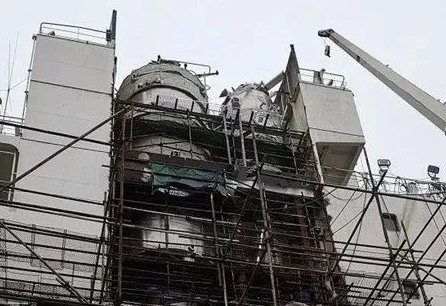
4.Coastal / near-shore vessels (domestic coastal & near-sea routes)
Meet domestic maritime air pollutant emission regulations for exhaust gas desulfurization in ports and nearshore waters.
5.Port berthing and anchoring conditions
While vessels are at berth or anchor, main/auxiliary engines generate exhaust gas. The scrubber keeps running to satisfy port emission control requirements.
6.Retrofit installation for existing old vessels
Retrofit scrubbers onto existing flue gas systems without main engine replacement, achieving exhaust compliance with lower investment.
7.Special vessels: offshore supply vessels, construction ships, research vessels
Long offshore operation periods with strict requirements for continuous emission monitoring, suitable for closed-loop or hybrid scrubber systems.
Advanced system design and modular architecture
The structural design of the marine desulfurization system parts emphasizes modular interchangeability and compatibility across scrubber types, enabling seamless retrofitting and maintenance. Dual baffle configurations and specialized mist removers reduce system wear and corrosion while maintaining optimal exhaust flow. This design strategy ensures that imo compliant scrubber spare parts function cohesively within the broader marine exhaust gas cleaning framework, simplifying component replacement and minimizing downtime, which is critical for continuous vessel operations.
Operational reliability and compliance assurance
Performance advantages include robust corrosion resistance, high-temperature tolerance, and precision emission monitoring, resulting in dependable sulfur oxide reduction. The marine exhaust gas cleaning spares supplier products enhance user value by integrating automated control and real-time emission tracking. This ensures vessels meet IMO sulfur limits consistently and reduces the compliance risk associated with fluctuating emission levels. Furthermore, user-friendly installation and maintenance protocols improve operational efficiency and extend component lifespan under demanding shipping conditions.
Advantages of Marine Desulfurization Scrubber
1.Compliant with international maritime emission regulations
2.Greatly reduce vessel fuel operating costs
3.High desulfurization efficiency with stable and reliable operation
4.Modular design, suitable for new vessel outfitting and retrofitting of existing ships
5.Complete on‑line monitoring and automatic control system
6.Multiple modes available to adapt to regulations of different sea areas
7.Anti‑corrosion materials for long service life
Emission compliance retrofitting in commercial shipping
In commercial shipping environments, retrofitting vessels with marine desulfurization system parts plays a critical role in upgrading existing exhaust gas cleaning systems to comply with evolving sulfur emission regulations. These parts serve as direct replacements for worn or obsolete components such as inlet baffles and spray nozzles. Their corrosion-resistant materials and precision-engineered seals provide high reliability for vessels operating on high-sulfur fuel, enabling compliance with IMO mandates. Integration with continuous emission monitoring systems allows operators to maintain accurate emissions data reporting and system control, ensuring smooth workflow integration within diverse fleet management operations.
Routine maintenance and operational integrity in maritime fleets
For shipping companies engaged in routine maintenance, the availability of quality imo compliant scrubber spare parts from a reputable marine exhaust gas cleaning spares supplier supports scheduled inspections and component replacements essential for system integrity. These parts prevent corrosion-related failures in scrubbers by employing advanced materials and design features such as mist removers and packing plates. Their use safeguards exhaust gas treatment efficiency, helping maintain consistent emission levels under various operational scenarios. This ensures uninterrupted maritime operations while meeting environmental compliance obligations and extending the lifetime of desulfurization equipment.


